Racing

Dr. Stuart Brown

EXECUTIVE STAFF

Dr. Stuart Brown


Vice President of Equine Safety 

Dr. Brown joined Keeneland in 2020 and serves as Keeneland's Vice President of Equine Safety

Internationally respected equine veterinarian Dr. Stuart E. Brown II, who joined Keeneland in June 2020, is Vice President of Equine Safety.

Dr. Brown leads Keeneland’s effort to develop, communicate and enforce safety and integrity policies for both racing and sales operations; reviews all racing-related accidents with the goal of prevention; assesses relevant equine health and safety research; and proactively communicates best practices to the racing community and public. His duties encompass Keeneland and The Thoroughbred Center, the training center in Lexington that Keeneland owns.       

Dr. Brown completed his undergraduate work at Transylvania University and earned his Doctor of Veterinary Medicine from Tuskegee University. He spent nearly 30 years with Lexington’s Hagyard Equine Medical Institute, specializing in equine reproduction and ambulatory medicine. He is Chairman of both the American Veterinary Medical Association (AVMA) Insurance Trustand the Organization of Racing Investigators; is the American Association of Equine Practitioners (AAEP) Delegate to the AVMA House of Delegates; is an Executive Board Member of the Racing Medication and Testing Consortium; is on the Board of the Kentucky Thoroughbred Association; and is member of The Jockey Club, the AAEP Public Policy and Welfare Council, the Kentucky Veterinary Medical Association (KVMA) Legislative Advocacy Committee; and the Grayson- Jockey Club Research Advisory Committee. He also is on the Dean’s Advisory Committee of University of Kentucky Equine Science.

Dr. Brown received the 2022 Kentucky Veterinary Medical Association Distinguished Service Award; the 2021 AVMA Meritorious Service Award; and the 2017 AAEP President’s Award. He is married to Jen Roytz and lives in Versailles, Kentucky.

Keeneland Race Track Maintenance And Study Key To Safer Surfaces

Keeneland Race Track Maintenance And Study Key To Safer Surfaces


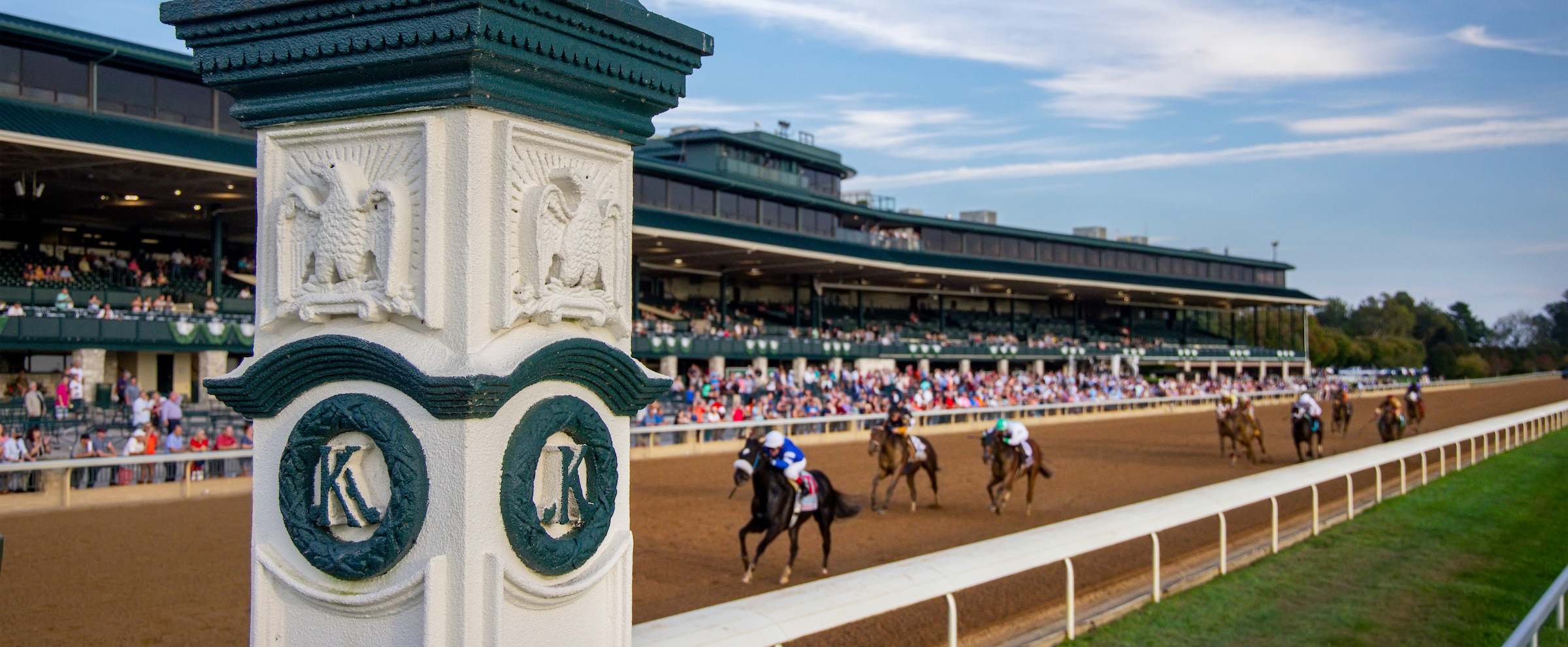
Keeneland is dedicated to providing the safest and most consistent dirt and turf racing surfaces in the industry. This commitment is reflected in the significant investment Keeneland has made in its unique race track design, ongoing research and study, the use of state-of-the-art equipment and year-round best practices employed by our race track team.

Keeneland track and equine safety officials work in consultation with Dr. Mick Peterson, director of the University of Kentucky’s Ag Equine Program and co-founder of the Racing Surfaces Testing Laboratory, and Dr. John “Trey” Rogers, professor of Turfgrass Management at Michigan State University, to apply the latest science and technology to maintain the safest racing surfaces possible. 

Keeneland shares its data and knowledge with the entire racing industry and particularly with other Kentucky tracks to create consistency among racing surfaces across the state’s racing circuit.

In 2014, Keeneland track officials undertook more than a year of research and testing of materials, water drainage systems and race track design before installing its main dirt track. The 1 1/16-dirt track is a blend of approximately 19,000 tons of sand, silt and clay native to Kentucky.

The drainage system under the track is key to maintaining a consistent racing surface. Beneath the track is a layer of porous asphalt that covers the complex vertical drainage system installed during a massive track renovation in 2006. The asphalt is covered by Mirafi 140N geotextile fabric, which maintains the integrity of the 26,000 tons of limestone screenings (Class I sand) on top of it that form the base of the race track.

Under the inside rail and along the outer rail through the straights and chutes, 27,500 interlocking EcoRain drainage cells filled with pea gravel are stacked horizontally and covered by a flexible porous paving material made from recycled tires. This system, the first of its kind in North America, collects and discharges water into the existing drainage system and away from the track.

Keeneland’s 7-furlong turf course is a mix of rye, bluegrass and tall fescue which grows best during the cooler spring and fall seasons. The turf course sits atop a foundation of sand, silt and clay which helps create a soft, springy race course.

In consultation with Dr. John “Trey” Rogers, professor of Turfgrass Management at Michigan State University, Director of Racing Surfaces Jim Pendergest and Track Superintendent Alfredo Laureano have incorporated new maintenance protocols to further enhance the strength and durability of the turf course. Divots in the turf course are now watered to shorten their reattachment time, while pre-germinated seed that has been soaked in water 48-60 hours is used in the divot mix. Keeneland also employs a mowing strategy that helps the grass grow denser and frequently rolls the course to keep the ground smooth.

The turf track features an innovative Mawsafe Turf Rail designed to spring and bend similar to the ropes around a boxing ring, absorbing the impact of a horse and rider and allowing the rider to safely guide his or her mount back onto the turf course. “Kick out” uprights on the rail allow for a pivotal, slip-free connection to the base plate. The design enables the upright to swing away should a fallen rider hit it. Upon impact, several uprights can slip free without losing the integrity of the railing. 

Keeneland also has a 5-furlong all-weather training track which is open year-round. The main track is closed through the winter months, reopening in mid-March before the Spring Meet.

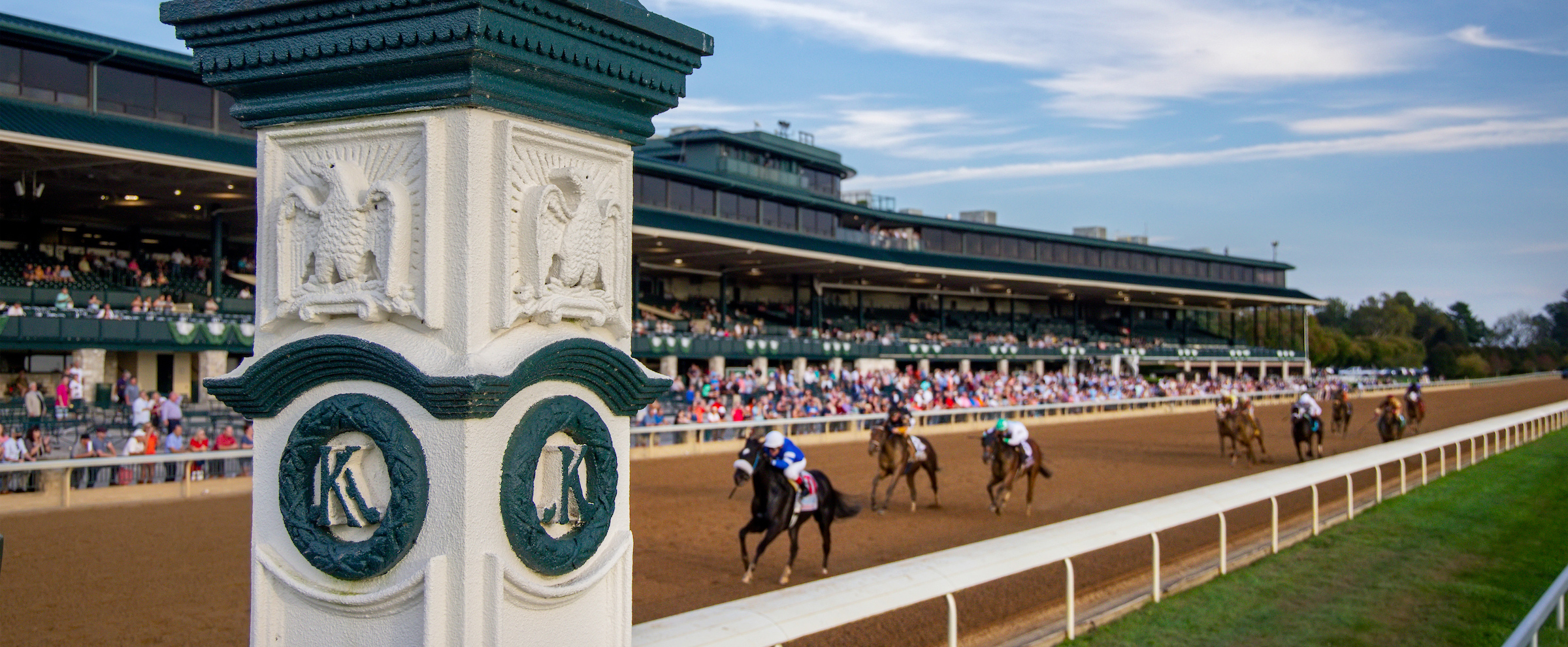
Daddy Is a Legend runs through the rail during the 2018 Pin Oak Valley View

Keeneland Collaborates With Kentucky Tracks On Medication Reform

Keeneland Collaborates With Kentucky Tracks On Medication Reform


In an unprecedented show of unity, Keeneland teamed with Kentucky’s other Thoroughbred tracks – Churchill Downs, Turfway Park, Ellis Park and Kentucky Downs – to advocate for medication reforms that were adopted by the Kentucky Horse Racing Commission in 2020.

Among the reforms currently in place:

  • A ban on the use of furosemide, commonly known as Lasix, on race day for 2-year-olds and for horses entered in stakes races.
  • Extension of the pre-race window for administration of corticosteroids for intra-articular injections. The standard at Kentucky tracks is 14 days pre-race.
  • Extension of the pre-race window to 48 hours for administration of nonsteroidal anti-inflammatory drugs (NSAIDs).
  • Prohibition on stacking pre-race NSAIDs: If more than one NSAID is given, the first must be at least 48 hours before the race and the second can be administered no less than four days pre-race.
  • Restriction on the use of bisphosphonates in horses younger than 4 years old. Bisphosphonates may be used in horses 4 and older to treat navicular syndrome, but the drug may only be administered by a veterinarian and the horse must remain on the Vet’s List for at least six months.
  • Race-day therapies are restricted to nebulizers. Spas, cryotherapies and magnet wave treatments are prohibited.

Enhanced Veterinary Inspections And Monitoring Strengthen Safety Protocols

Enhanced Veterinary Inspections And Monitoring Strengthen Safety Protocols


Keeneland Vice President of Equine Safety Dr. Stuart Brown and Racing Safety Officer Dr. George Mundy have initiated innovative strategies in furtherance of the track’s commitment to safety and welfare.  

Protocols include mandatory veterinary inspections prior to workouts and race entry along with enhanced medical reporting and transparency requirements for trainers and attending veterinarians with regard to the fitness of horses to work and race. 

Horses are examined at their barns and on the track every day. These evaluations focus on the well-being of each horse and become the foundation for decisions made on the horse’s behalf regarding competing, seeking further diagnostics, scheduling time off or considering other suitable options.

“The single most important opportunity we have to positively impact the welfare of the equine racing athlete can be found in the creation of these unique examinations centered on the well-being of every horse who touches our racing surface,” Dr. Brown said. “By defining the parameters contained within the Equine Safety Agreements we have with our horsemen, we create the qualitative approach to advocate for the safety of each horse that resides at Keeneland and TTC. The outcomes of these conversations among the advocates who care for these horses allow us to assess their suitability to compete safely on our racing surfaces.”

Dr. Brown and Dr. Mundy worked with Keeneland’s Broadcast Services team to create a network of video cameras that capture footage of horses training and racing over Keeneland’s dirt and turf surfaces and all-weather training track. The system that monitors and evaluates horses for safety purposes is the first at a U.S. race track.

Stationary cameras that pan, tilt and zoom provide multiple views of horses on each track. Dr. Mundy can control camera positions and record video from his perch on the fourth-floor Grandstand overlooking the main track. He communicates with Dr. Brown, who is trackside and in the stable area throughout the race day. The two share observations about horses training, warming up before races and galloping out after races. If needed, they can provide video to state veterinarians, stewards and trainers anywhere on track for viewing.  

“Twenty-five years of information gathering has taught us that a horse at risk of injury falls somewhere in the Bone Stress Continuum,” Dr. Mundy said. “Horses are honest and changes in their routine exercise gaits are often early indicators of ongoing or impending injury. Keeneland’s video surveillance program is yet another tool for horsemen and veterinarians to enhance the safety of our racing and training populations each and every day.”

Keeneland reports information about horses that are injured during racing or training to the Jockey Club Equine Injury Database (EID). The EID is a national database created to track racing injuries in an effort to identify the frequency, types and outcome by using a standardized format that generates valid statistics, identifies markers for horses at increased risk of injury and serves as a data source for research directed at improving safety and preventing injuries.

Focus On The Care Of The Racehorse In Racing And Training

Focus On The Care Of The Racehorse In Racing And Training


Keeneland’s commitment to the safety and welfare of the equine athlete is further reflected in a far-reaching program that touches all aspects of racing and training:  

State-of-the-Art Barn Surveillance System

Keeneland employs a state-of-the-art camera surveillance system in every barn on its grounds that is monitored 24 hours a day by the track’s security team. This comprehensive system increases the capacity of security to immediately respond to any needs (i.e., fire, loose horse, water issues) that arise in the shedrow or barn area.

Outriders

Outriders act as the police officers of the race track. These experienced horse people are positioned around the track every day to carefully monitor training and racing: acting as first responders when a horse and rider need assistance; enforcing appropriate rider etiquette as it pertains to safety on the race track and ensuring certified safety helmets and vests are worn by every rider.

Race Track Warning System

Keeneland uses a dual lights and siren warning system which is activated to alert riders in the event of a loose horse during training, a failure to remove the starting gate during a race or other incident that might require halting a race.

State-of-the-Art Equine Ambulances

Three specially designed, state-of-the-art equine ambulances are stationed just off the race track and are able to quickly reach a horse that is injured or needs a precautionary ride back to its barn.

These ambulances feature a hydraulic system that allows the rear of the vehicle to lower to the ground so the horse can more easily walk aboard. Padded walls can be adjusted to hold the horse comfortably in place during transport. Traveling on each ambulance are a veterinarian and three members of Keeneland’s track maintenance crew.

Keeneland also leverages the expertise of its security team to provide immediate transport to nearby, world-renowned equine veterinary facilities such as Hagyard Equine Medical Institute or Rood & Riddle Equine Hospital for further comprehensive care as required.

Starting Gate Safety 

Keeneland starter Jeff Powell and his crew take a thoughtful approach to operating the starting gate on race days and they work in tandem with the Keeneland racing staff and equine safety team to ensure the well-being of horse and rider. This collaboration is a further extension of Keeneland’s commitment to putting the horse first.  

Keeneland has two 14-stall starting gates (one functions as a back-up gate in case of a malfunction). Both are lined with thick rubber padding that protects horses and riders from injury while they are in the gate.

Safe Footing

Walkways to the track through the Paddock, Walking Ring and Tunnel as well as in the Winner’s Circle are made of rubber pavers. The pavers reduce slippage and are more forgiving on horses’ hooves than harder surfaces.

Keeneland Safety Committee

Keeneland has established a safety committee that meets weekly during race meets (and as necessary during the off-season) to discuss concerns, find solutions and create and review protocols. The Safety Committee comprises Keeneland management and staff representing racing, track maintenance, mutuels, security, communications, broadcast, outriders, the Kentucky Horse Racing Commission and the Jockeys’ Guild.

Results

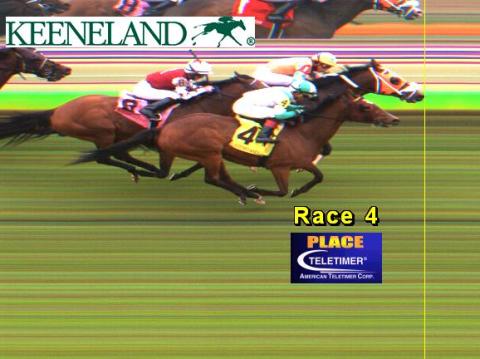
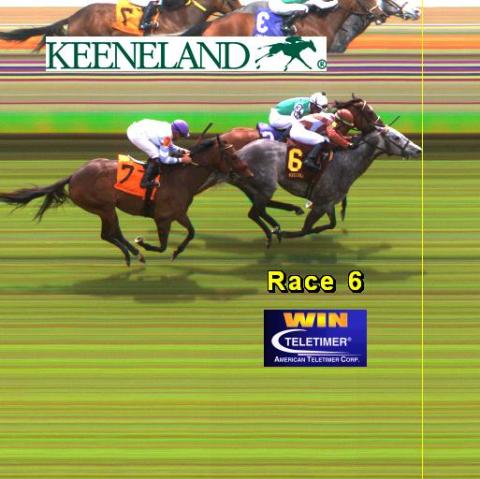
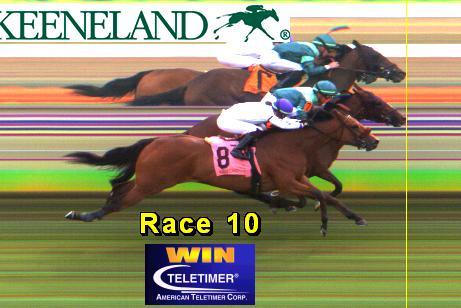
RACE RESULTS

Results


Click below to see past Keeneland racing results.

If you are having difficulty viewing or printing this information, you can open the results in a new window.

Horsemen's Hospitality Guide

HORSEMEN'S HOSPITALITY GUIDE

Welcome to Keeneland Racing !


We look forward to hosting you during the Keeneland Spring & Fall Race Meets. Please browse our horsemen's guide below for details on accommodations during your visit.

Race Day Accommodations


General Admission

Horsemen are welcome to use their Kentucky Horse Racing Commission License (KHRC License) at any of the Keeneland Grandstand Entrances to gain complimentary access for themselves and a guest onto the Keeneland grounds.

Undercard Accommodations:
The Blue Grass Room


Keeneland is excited to offer the connections of each undercard horse passes to The Blue Grass Room to enjoy their day at the races. Reservations are required, and may be requested utilizing the form below.

Owners: 4 Passes
Trainers: 2 Passes

Location: 3rd Floor, Paddock View

Dress Code: Casual

Additional passes to The Blue Grass Room are $25 with requests being fulfilled pending daily availability.

Stakes Accommodations:
The Stakes Lounge


We look forward to welcoming our Stakes Horsemen to enjoy a fantastic day at the races. The connections of the stakes horse will be provided passes to The Stakes Lounge at the Lafayette Room along with Paddock Passes for their entered race. Reservations are required, and may be requested utilizing the form below.

Owners: 6 Passes to The Stakes Lounge
Trainers: 2 Passes to The Stakes Lounge

Location: 4th Floor, Track View

Dress Code: Coat and Tie

Additional passes to The Stakes Lounge are $90 and may be fulfilled based on remaining daily availability.

Paddock Passes


Undercard Races

Access to the Paddock for Undercard Races may be gained by either walking up with your horse from the barns, or by showing your Kentucky Horse Racing Commission License (KHRC License) to our Keeneland Staff at the Paddock entrances.

Stakes Races

Owners of horses entered in Stakes races will be permitted up to six passes per horse. Trainers of horses entered in Stakes races will be permitted up to 2 passes per horse. These passes may either be picked up at the front desk at The Stakes Lounge, or at the Horsemen’s Will Call window at the Ticket Office. To coordinate the pickup location for these passes, please reach out to our Horsemen’s Hospitality team.

Parking


Complimentary parking is available for our Horsemen in the Green Lot. To access this parking area, show your Kentucky Horse Racing Commision License (KHRC License) to the attendant.

Stakes parking is available in the Gold Lot. Digital parking passes will be sent out prior to race day.

Hotel & Dining


Hotel Accommodations

For more information on local hotels and available Horsemen Rates, please reach out to our Horsemen’s Hospitality Team.

Dining Accommodations

Learn more about local favorite restaurants and dishes.

Transportation


Airport Shuttle

Should you need a ride to or from Keeneland and the Airport, please reach out to our Horsemen’s Hospitality team to assist with coordinating transportation.

Uber and Lyft

Both Uber and Lyft operate in Lexington. Each have a new rider promo code you can use for a discount on your ride while in town.

Important Locations & Hours


Horseman's Will Call

Located at the Ticket Office / Welcome Center at the South Grandstand Entrance, the Horsemen’s Will Call is the last window on the right hand side of the building. Our staff at the window can assist with any questions that arise in addition to holding tickets and paddock passes for day-of pickup.

Race Meets

Open from 10 a.m. to the last race, and closed Mondays and Tuesdays during the race meet. ​Please reach out to Horsemen's Hospitality for any needs that arise

Information Center

Should you be traveling straight to and from Keeneland that day, the Information Center is happy to hold your bags for you while you enjoy a day at the races. Enter the Information Center on the Clubhouse side of the building and the assistant at the front desk will be able to assist you with storing your luggage for the day.

Race Meets

Open from 10 a.m. to the last race, and closed Mondays and Tuesdays during the race meet. ​Please reach out to Horsemen's Hospitality for any needs that arise

Racing Secretary's Office

The Racing Secretary’s Office can be found near The Gap and Barns 20 & 31 and houses a plethora of racing departments including nominations, claiming, and licensing.

Stable Office

Located within the main shipping chute near Barn 28, all horses shipping in must present necessary paperwork to the office prior to horses being uploaded.

Shipping & Stabling Policies

KHRC Licensing

KHRC Licensing will be located at the sales counter in the Sales Pavilion beginning March 27. It will be open every day during the race meet, aside from Monday and Tuesdays, from 9 a.m. through the last claiming race of the day.

KHRC Licensing phone number: 859-288-4229.

Helpful Resources

Upcoming Dates

January Horses of All Ages SaleJan. 12-15
Spring MeetApr. 3-24
April Selected Horses of Racing Age SaleApr. 24
September Yearling SaleSept. 14-26
Fall Meet Oct. 2-24
Championship SaleOct. 28
November Breeding Stock SaleNov. 3-10
November Horses of Racing Age SaleNov. 11

Racing Directory


Gatewood Bell

Vice President of Racing

Photo of Gatewood Bell

Dr. Stuart Brown

Vice President of Equine Safety

Photo of Dr. Stuart Brown

Ashley Whalen

Director of Racing & Sales Administration

Portrait of Ashley Whalen

Ben Huffman

Racing Secretary

Portrait of Ben Huffman

Morgan Richardson

Horsemen Relations Manager

Portrait of Morgan Richardson

Lizzie Westerfield

Horsemen Hospitality Specialist

Lizzie Westerfield

Wayne Mogge

Stable Manager

Wayne Mogge

Ryan Oakman

Horsemen's Bookkeeper

ryan oakman

Jeff Powell

Starter

jeff powell

Customer Service


For any questions or concerns please click here to email Morgan Richardson or call (859) 288-4322.

The Basics Of Betting

The basics of betting

The Keeneland Guide To Betting


Live racing at Keeneland is exciting whether you make a bet or not. But it's even more fun when you cash a winning ticket. Use this guide below to learn the basics of betting – from how to choose your bet, to how to place your bet at the window and more. Good luck!

STEP NO. 1

Choose Your Bet


Step no. 1
Choose your bet
Unordered Finish Position
Order of finish
Wildcard Finish Position
Box Bet
1st
2nd
3rd
4th

Win

Finish in 1st

Ordered Finish Position
Ineligible
Ineligible
Ineligible

Place

Finish in 1st or 2nd

Unordered Finish Position
Ineligible
Ineligible

Show

Finish in 1st, 2nd, or 3rd

Unordered Finish Position
Ineligible

Across the Board

Win, place or show for a single horse on one ticket

Ordered Finish Position
Ineligible

Exacta

First two in exact order

Ordered Finish Position
Ineligible
Ineligible
1st
2nd
3rd
4th

Exacta Box

First two in any order

Wildcard Finish Position
Ineligible
Ineligible

Trifecta

First three in exact order

Ordered Finish Position
Ineligible

Trifecta Box

First three in any order

Wildcard Finish Position
Ineligible

Superfecta

First four in exact order

Ordered Finish Position
STEP NO. 2

Find A Place To Make Your Bet


Keeneland Select Home icon

Bet from home with Keeneland Select

Window icon

Go to a window

Mobile Device icon

Bet from your Mobile Device

Self-service Machine icon

Use a Self-Service Machine

STEP NO. 3

Place your bets


At the window, say the following in order:

PART 1

Name of Track

PART 2

Race Number

.

PART 3

Amount of Bet

PART 4

Type of Bet

PART 5

Number of Horses

For Example:

Keeneland,

PART 1

Race 6,

PART 2

$2

PART 3

to Win

PART 4

on the 4

PART 5

Lessons in BETology

Where to Place a Wager

How to Read a Program

Handicapping Tips & Tools

Full Charts

Racing Charts

Keeneland races each April and October. View full charts from past Keeneland races through the Equibase tool below.

Search Equibase Stat Profile Pages